

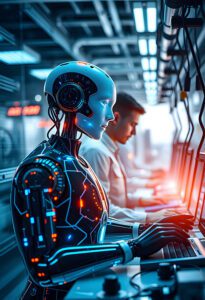
“We have artificial intelligence, virtual reality, augmented reality, 3D printing, robotics, and nanotechnology that have changed the face of modern medicine. It is essential for doctors to familiarize themselves with the latest developments to be able to control technology and not the other way around.” – Tamilisai Soundararajan
With the ever-increasing presence of Waymo and other self-driving cars now, you may find driving is actually a more interesting experience. I don’t know about you, but I find myself naturally smiling or even waving to the considerate “driver” in the Waymo! Or at the cute Coco, the food delivery robots scurrying along the sidewalks.
This is not simply because I am a Boomer and grew up watching The Jetsons and Twilight Zone episodes that prophesied these amazing creations. Still, there is a psychological dynamic at play here: Anthropomorphism. That’s a big word that explains humans’ natural inclination to treat a non-human entity as we would a human, even when we know it is not human. Not only does this explain our immediate connection with live animals, but stuffed ones, dolls, mannequins, and yes, robots. Probably because we are human and can only come from a place of what we know, our minds have a natural tendency to force the meaning we’d like these objects to have onto them.
An increasing number of workers in factories, eateries, sports (look out, umpires and referees!), and even entertainment fear robots will replace their jobs….and they will be. Robots don’t get bored, need vacations, have kids to be driven to football practice, or caretake sick loved ones. They also make fewer careless errors. Further, they can’t discriminate, harass, assault, or embezzle. We are increasingly seeing robots perform a wide range of tasks, including surgeries, food preparation and delivery, data entry, assembly, retail work, and clerical duties. Tasks also include transportation, astronaut roles, rescue work, caregiving, driving, and assisting in legal, medical, and pharmaceutical fields. Soon we will see and use flying cars. According to Pew, 19% of jobs will be replaced by AI over the next decade. Recent projections posit that 65% of grade school children will enter careers that do not yet exist.
While this can seem depressing to many folks, remember that any time in American history when there was a major invention, thousands of new jobs cropped up as a result. Not too long after the turn of the last century, those in the horse and buggy industry had an opportunity to become part of the automobile industry when it was born. Many railroad workers entered the airline industry shortly thereafter. Later, those in the radio business transferred their skills and took on new ones in the television world, and so on. In actuality, we’ve been experiencing a phasing in of more machines and a phasing out of humans over the past few decades already. Examples include ATMs, self-service lines, virtual assistants, online shopping, AI, and more. With every loss, there is a gain. The demand for engineers, computer scientists, technicians, and coders will explode. Rather than fearing human beings will become obsolete, we can allow robots to be our partners. Cars did not make horses an endangered species. Planes did not replace trains.
Smart people will look for ways to retrain, reinvent, envision emerging needs, or be part of the myriad ancillary businesses that robotics will create. These could be in design, engineering, testing, parts manufacturing, packaging of those parts, training, management, service, and repair. In arts and entertainment, sports, the food and beverage industry, travel, investments, and luxury products/services, the savings of time and money can also flourish. Remember, robots can absorb many human tasks and make workplaces safer, but what they do not possess (yet) is imagination. Creativity. Self-expression. The human touch.
Imagine a world where robots handle a great many drudgeries and time-consuming tasks. As a result, humans are free to live more stress-free, connecting on a deeper level with the gift of more time, and are freer to follow their dreams and visions. What if people were free to be and do what they truly want, vs. what is “safe” or “secure”? There will still be doctors, lawyers, teachers, creative artists, parents, counselors, and leaders. And they may operate at a much higher frequency if robots can reduce stress.
“We cannot solve our problems with the same thinking we used when we created them. Imagination is more important than knowledge.” – Albert Einstein
I’m happy to offer a complimentary 15-minute phone consultation to help you or a loved one reinvent. Please call or email me to schedule a call.
Hypnosis can help you overcome an addiction, commit to a health and fitness regimen, enhance your sport, and more. Learn more about hypnosis specialties.